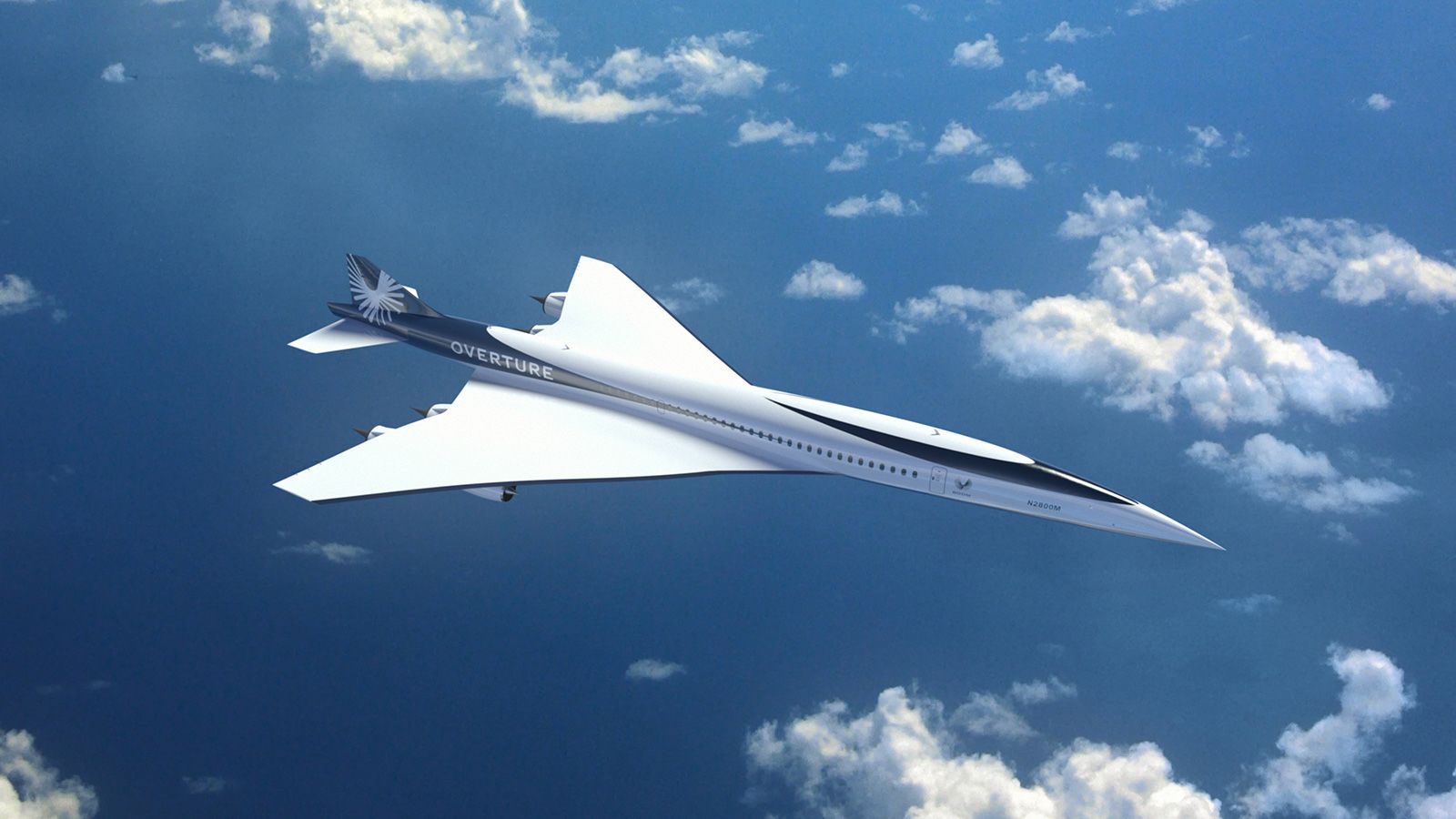
Boom Supersonic aims for Overture’s first test flight to take place before 2030.
The return of supersonic travel is finally happening after years of waiting. With the successful test flight of Boom Supersonic XB-1 prototype aircraft, a new jetliner flying at Mach 1.7 is now just a few years away.
Boom Supersonic’s plans have revived the dream of supersonic travel twenty years after the retirement of Concorde. The XB-1’s successful mission over the Mojave Desert demonstrated that supersonic travel is possible and could be commercially viable in the near future.
Beyond speed A new era with Boom Supersonic
Boom Supersonic asserts that its XB-1 prototype jet incorporates a number of advanced technologies that will be utilized in a commercial supersonic aircraft they call Overture. These technologies include carbon fiber composites, advanced avionics, digitally optimized aerodynamics and advanced supersonic propulsion.
The Overture did designed to carry 64 to 80 passengers and run entirely on sustainable aviation fuel (SAF). It will also be powered by four engines, Boom’s in-house developed Symphony.
Company aims for Overture’s first test flight to take place before 2030. Three times larger than the XB-1, the jet will fly at twice the speed of today’s subsonic passenger planes.

Breaking the sound barrier: Supersonic travel with Overture
Boom Supersonic has some major hurdles to face. The first is financing; the company has raised $700 million, but the cost to complete the supersonic jet could be $8 billion. Also, regulations against sonic booms could limit Overture’s full speed only when traveling over water.
Source: https://www.cioupdate.com.tr/manset/boom-supersonic/