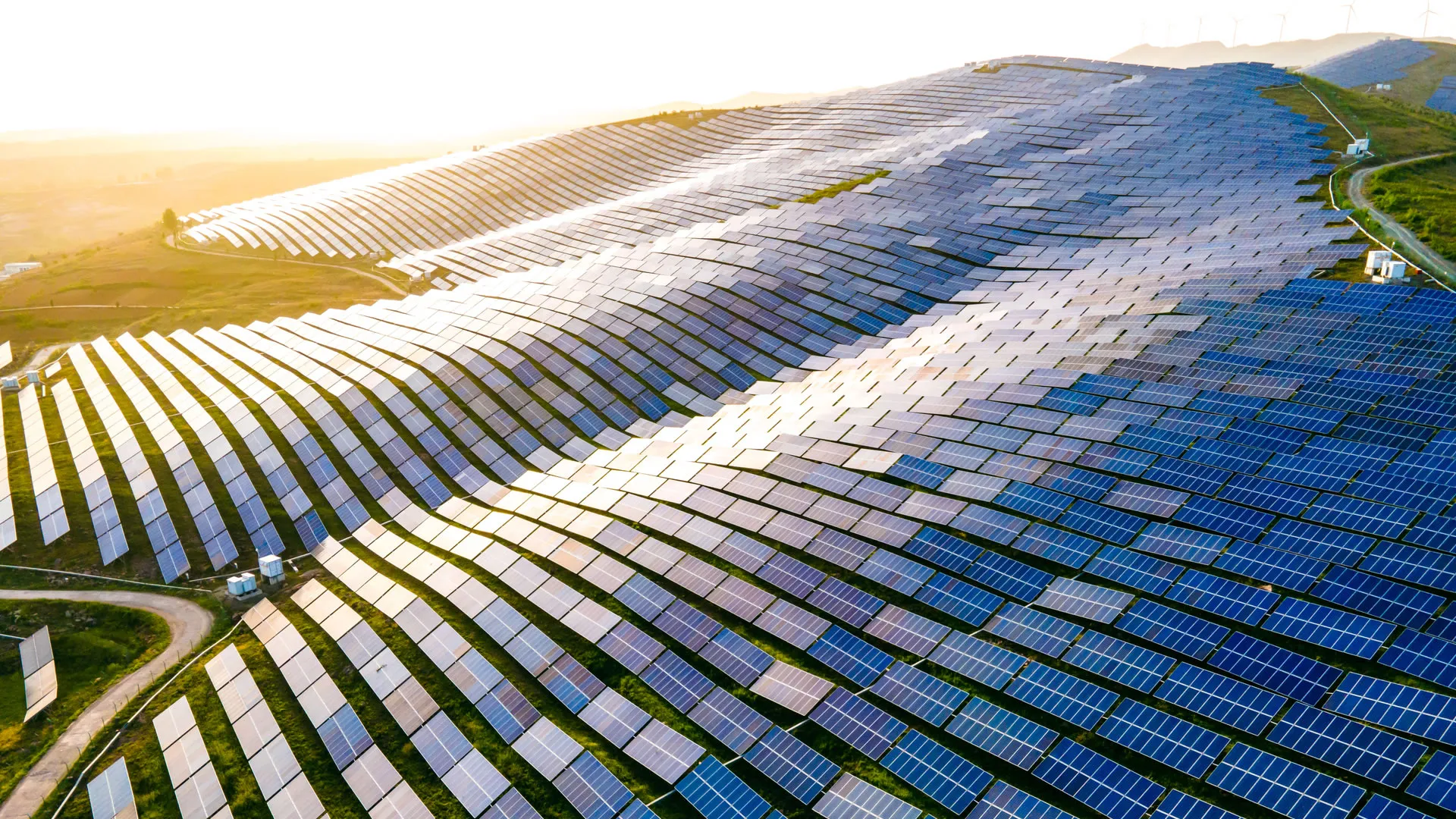
China has become the world’s solar superpower, installing more renewable capacity each year than the rest of the world combined. With over 1,000 GW of solar power — nearly half of global capacity — the country has turned clean energy into an engine of industrial policy, national security, and global influence. Its blend of state planning, market competition, and relentless innovation offers lessons far beyond energy.
Why China Is Growing So Fast
The sheer scale of China’s solar growth is staggering. What began as a response to choking air pollution and international climate pressure has evolved into a strategic transformation of the entire energy system. By 2025, solar capacity exceeded 1 terawatt.
Three intertwined drivers explain this trajectory:
-
Climate Commitments: China has pledged to peak carbon emissions by 2030 and achieve carbon neutrality by 2060.
-
Energy Security: A desire to reduce reliance on imported oil and gas, particularly given rising geopolitical tensions.
-
Industrial Ambition: A determination to lead global supply chains for solar panels, batteries, and next-generation technologies.
What makes China’s case distinctive is how these motives reinforce each other. Cleaner skies improve public health. Reduced fossil fuel imports strengthen national security. And dominating clean-tech markets elevates China’s global standing. This convergence of incentives has turned renewable energy from a climate issue into a pillar of national competitiveness.

China’s Global Leadership in Solar Energy
By many measures, China’s leadership is unmatched. In 2024 alone, it added 277 GW of solar capacity, more than India’s entire cumulative total. Its $818 billion investment in clean energy that year was twice the level of any other economy. And fossil fuels, once dominant, now represent less than half of the country’s installed capacity — a dramatic fall from 66% just a decade ago.
What is striking is not only the raw numbers but the speed. In 2022, China installed as much solar as the rest of the world combined. In 2023, it doubled that. Analysts now expect Beijing to exceed its 2030 goal of 1,200 GW of renewables years ahead of schedule.
This scale reshapes global markets. Chinese firms supply panels at prices that make solar affordable worldwide, while also challenging competitors in the U.S. and Europe. The result: China is not just participating in the global energy transition — it is setting its pace and direction.
Mega Projects: From Xinjiang to Floating Farms
One way to grasp the magnitude of China’s solar push is to look at its flagship projects.
In Xinjiang, a 5 GW desert solar farm stretches across barren land, generating enough electricity to power a small nation. In Qinghai’s Golmud, a 2.8 GW site is already among the largest in the world, with plans to expand to 16 GW. These projects repurpose underutilized desert land into high-output energy hubs.
But the innovation goes beyond land. In Hebei’s Tangshan region, 370,000 solar panels float above fish ponds, generating 400 million kWh annually while providing shade that cools water and boosts aquaculture yields. Here, the phrase “energy above, fish below” captures a hybrid model that produces both food and power.
These mega-projects are more than symbols. They demonstrate China’s ability to execute at scale, mobilize resources quickly, and experiment with hybrid designs that make solar power economically and environmentally multipurpose.

Beyond Electricity: Agriculture, Aquaculture, and Livestock Integration
China is pioneering models that combine solar power with rural livelihoods. In Ningxia, a 1 GW agrivoltaic project transformed 100 km² of desert. By planting alfalfa and goji berries beneath panels, the site increased vegetation cover by 85%, reduced evaporation by 30–40%, and even attracted wildlife back to the area.
In Tangshan, floating solar reduced fish disease while boosting panel efficiency by up to 15%. And in Qinghai, “solar sheep” graze under panels, trimming vegetation naturally. In 2023, sales of 13,000 sheep from these integrated farms brought local herders ¥11 million in income.
These cases illustrate a broader trend: solar energy is not just an energy transition story. It is also a rural development policy, offering new revenue streams, ecological restoration, and a way to align national decarbonization with local prosperity.
State Support and Public-Private Partnerships
China’s solar boom did not emerge spontaneously. It is the product of deliberate state strategy combined with private-sector dynamism.
Since the mid-2000s, each Five-Year Plan has expanded renewable targets, backed by subsidies, land access, and cheap financing. Today, China controls 98% of global wafer production, 92% of cells, and 85% of modules. This dominance reflects both industrial policy and economies of scale.
Yet state firms do not act alone. Private leaders like LONGi and Trina Solar drive global innovation, while local governments broker rooftop projects with private developers. Together, this ecosystem creates a model of state-market symbiosis — one that other economies struggle to replicate.
Innovation and the Patent Race
Beyond scale, China is racing to lead in technology. By 2024, it had filed 126,400 solar-related patents, more than one-third of the global total. Efficiency records continue to fall: LONGi achieved 34.8% with tandem perovskite-silicon cells; Trina Solar reached 31.1% in laboratory conditions.
This constant push is not just a vanity metric. It ensures China’s manufacturers move up the value chain, producing advanced modules that are more efficient, durable, and versatile. With 500 GW of annual production capacity, Chinese firms now produce twice global demand — a structural advantage that cements cost leadership but also raises questions about long-term profitability.

Rooftop Power: Distributed Solar Across Cities and Villages
Not all of China’s solar growth is about deserts and megaprojects. Increasingly, it is about rooftops and communities.
The Whole County PV Program, launched in 2021, set aggressive targets: cover half of government buildings, 40% of schools and hospitals, 30% of factories, and 20% of rural homes. Instead of persuading households individually, the program organized adoption at the county level. Developers bid to cover entire towns, cutting costs through scale and simplifying bureaucracy.
By 2022, distributed solar capacity had tripled year-on-year to 9 GW. Analysts estimate rooftops alone could add 600 GW to national capacity. More importantly, rooftop solar changes the narrative: it decentralizes the transition, gives households a financial stake, and reduces electricity costs for millions of families. In rural areas, leasing rooftop space provides new income streams, while in urban centers it strengthens resilience against grid stress.
Risks and Uncertainties
For all its success, China’s solar boom faces headwinds. The industry’s overcapacity is driving panel prices so low that even market leaders reported losses of more than ¥8 billion in Q1 2025. Land-use conflicts are rising as solar farms expand into fertile agricultural regions. And internationally, cheap Chinese panels have triggered trade disputes, with the US and EU investigating “overcapacity” and considering tariffs.
Technical challenges remain as well. Grid bottlenecks limit the use of desert-generated power. Energy storage must scale rapidly to handle intermittency. And looming on the horizon is the question of panel recycling, as today’s massive deployments will eventually age out.
These risks do not negate China’s achievements but remind us that even the fastest transitions come with structural strains.
Conclusion: How China’s Energy Transition Is Reshaping the World
China’s solar revolution is more than a domestic achievement. It has lowered the global cost curve, democratized access to clean power, and shifted the geopolitical center of gravity in energy. For developing countries, Chinese panels make solar affordable. For advanced economies, China’s dominance presents both an opportunity and a challenge.
The broader lesson is that energy transitions are not only technological shifts but also political and industrial strategies. China’s model — massive scale, relentless innovation, and state-market alignment — demonstrates how quickly change can happen when multiple incentives converge. From desert megafarms to rooftop programs, the sun rising over China is now shaping the world’s energy future.
Key Takeaways
-
China surpassed 1,000 GW of solar capacity in 2025, nearly half of the global total.
-
Industrial policy, state-owned firms, and private innovators together fuel its leadership.
-
While risks of overcapacity, land conflict, and trade tensions remain, China’s solar push has permanently reshaped global energy economics and geopolitics.